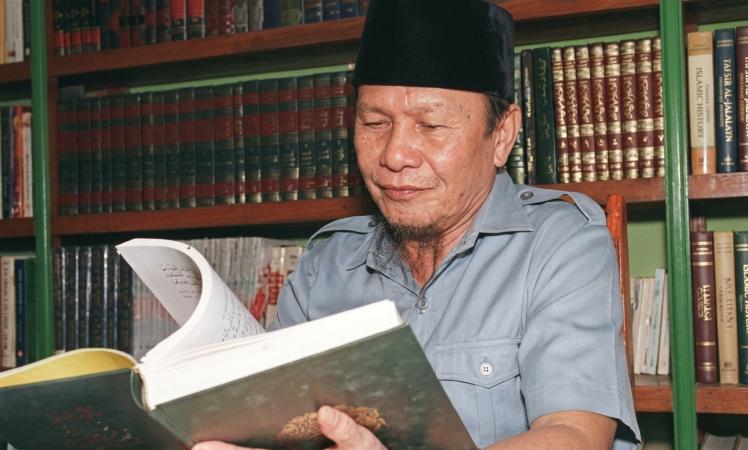
Salamat Hashim's vision: Fulfilled, or a new chapter of the struggle? (An analysis of the MILF founder's legacy)
Ustaz Salamat Hashim (Allah yarhamuh), founding chairman and Amirul Mujahideen of the Moro Islamic Liberation Front (MILF), led the Bangsamoro struggle for self-determination until his death in 2003.
Today, with the enactment of the Bangsamoro Organic Law (BOL), the establishment of the Bangsamoro Autonomous Region in Muslim Mindanao (BARMM), and the holding of the region's first parliamentary elections on Sept. 14, 2026, the Bangsamoro has reached a significant milestone in its political aspirations.
But has this fulfilled the vision of Ustaz Salamat Hashim?
In my view, not yet.
While substantial progress has been made on the political track, significant commitments under the normalization track of the Comprehensive Agreement on the Bangsamoro (CAB) remain to be fulfilled. These include the completion of decommissioning, socioeconomic assistance and sustainable livelihoods for former combatants and their families, the transformation of MILF camps, transitional justice, reconciliation, and long-term security.
Beyond these commitments, the new Bangsamoro government must show that self-governance can deliver genuine justice, efficient public services, transparency, accountability, and inclusive economic development.
Having a Parliament, ministries, and elected officials is not enough. The true measure of success is whether ordinary Bangsamoro citizens feel the tangible benefits of peace and self-governance.
The new chapter of the struggle must therefore focus not only on establishing political institutions but on strengthening them through the Islamic principles of amanah (trust and accountability), adl (justice), and shura (consultation).
MILF and MNLF communities, civil society organizations, and other sectors also have important roles in advancing reconciliation, community development, and good governance. Their responsibility goes beyond supporting the government; they must also serve as constructive partners and independent watchdogs in ensuring that peace commitments are fulfilled.
Political victory is an important milestone, but genuine and lasting peace, justice, unity, and inclusive development remain the greater challenge.
The question is no longer simply who will lead the Bangsamoro, but how its leaders and people will fulfill the aspiration that generations before them sacrificed and struggled to achieve.